EcoDesign in luxury retail is a design approach that integrates sustainability, circular economy principles, and responsible material selection across the entire lifecycle of the commercial space. Its goal is to reduce environmental impact without compromising the customer experience or brand identity. The EcoDesign approach makes it possible to create commercial spaces that are more efficient, reusable, and aligned with the evolving demands of today’s consumer.
The design of commercial spaces has evolved toward a model in which sustainability in retail is a defining factor. Luxury brands are no longer focused solely on visual impact and they are increasingly committed to reducing their environmental footprint and improving the traceability of their processes.
In this context, the concept of EcoDesign has emerged as a scalable strategic axis that transcends trends. It is not simply a matter of meeting regulations or minimizing damage. It means rethinking the entire lifecycle of furniture and spatial elements, from material selection through manufacturing, use, disassembly, and reuse. A holistic approach that redefines how brands build their identity at the point of sale.
At Aluma3, we have adopted EcoDesign as an integral philosophy across all our processes from design with sustainable materials to in-house manufacturing and space reuse.
Sustainable Materials in Luxury Retail: How to Choose Them
Within EcoDesign, sustainable materials in luxury retail are a key factor in reducing environmental impact without sacrificing perceived quality. Choosing these materials thoughtfully enables the creation of commercial spaces that are more durable, efficient, and consistent with brand values.
The key lies not simply in using sustainable materials, but in selecting those that balance every dimension of the brand image. For a material to be genuinely sustainable in retail, it must satisfy several critical criteria:
- Aesthetic coherence with the brand
- Durability and resistance to intensive use
- Recyclability or potential for reuse
- Responsible origin and controlled production processes
Examples of sustainable materials in retail include certified wood (such as FSC-certified), recycled metals, high-durability technical surfaces, and new composite materials designed for reuse. These materials allow for the creation of sophisticated commercial spaces without compromising environmental criteria.
The most significant challenge here is integrating these materials harmoniously, preserving the brand’s visual language while guaranteeing a premium experience for the end customer.
Sustainable materials in retail do not only reduce environmental impact, they also strengthen brand perception. That is precisely what EcoDesign defends: design that goes beyond sustainability.
That is why at Aluma3 we work with the most sustainable and efficient materials on the market, applying them in projects where every detail counts.
A clear example of EcoDesign with sustainable materials is the Loewe stands for El Corte Inglés, where the use of artisan materials, natural surfaces, and efficient manufacturing processes made it possible to create a commercial space aligned with sustainability and durability criteria, elevating the brand’s image in the process.
Projects of this kind reflect how the application of EcoDesign in luxury retail through the selection of sustainable materials was key to reducing environmental impact without compromising perceived quality.

Eco Furniture for Retail: Design, Functionality, and Responsibility
Furniture is undoubtedly the central element of the retail space, and within the EcoDesign framework, the development of static elements must respond to multiple simultaneous requirements:
- Selection of sustainable materials
- Design of modular, adaptable systems conceived to optimize the lifecycle, with easy assembly and disassembly
- Integration with the circular economy, enabling elements to be recovered, redesigned, or redeployed across other projects
- Manufacturing efficiency, minimizing waste and reducing production and installation lead times
The concept of eco furniture extends well beyond the material itself as it encompasses the entire lifecycle. Designing modular, repairable, reusable, and adaptable pieces reduces the need to produce new elements for each project. Ultimately, extending the lifecycle of every component is a core piece of the sustainability integrated into the process. The development of eco furniture is one of the most tangible ways to apply EcoDesign at the point of sale.
This is particularly relevant in dynamic environments, where brands constantly refresh their spaces and need flexible solutions, and where consumers increasingly demand transparency and visibly sustainable outcomes.
One example of this approach is the stand developed for Biotherm at El Corte Inglés Goya, designed around the Blue Fountain refill system. Here, the furniture was not simply functional from a display perspective, but it was specifically conceived to facilitate container reuse, integrating refilling, cleaning, and maintenance processes directly within the commercial space.

Projects like this demonstrate how eco furniture can go far beyond aesthetics, becoming an active instrument for applying circular economy principles at the point of sale and reducing the environmental impact associated with consumption. This project is a clear example of how EcoDesign can be realized in practical solutions within retail.
Circular Economy in Retail: How to Design Reusable Commercial Spaces
EcoDesign in retail begins from a fundamental premise within the circular economy: spaces are not permanent. Flagships, pop-ups, and corner stores evolve constantly which, from a practical standpoint, implies a high turnover of furniture and display elements.
Applying the circular economy in retail from the outset of the EcoDesign process allows for the creation of more efficient and sustainable spaces through:
- Reducing dependence on new materials
- Optimizing the use of existing materials
- Designing with continuity in mind where each element can be adapted, transformed, or reincorporated into future projects
- Minimizing waste in manufacturing and installation processes
This approach not only reduces environmental impact, but it enables retail brands to move toward a more sustainable and efficient model, while also making it easier to communicate a genuine form of sustainability grounded in concrete decisions such as material reuse and resource optimization.
The circular economy is, in essence, one of the foundational principles of EcoDesign applied to retail.

In-House Manufacturing: Total Control and Sustainability in EcoDesign
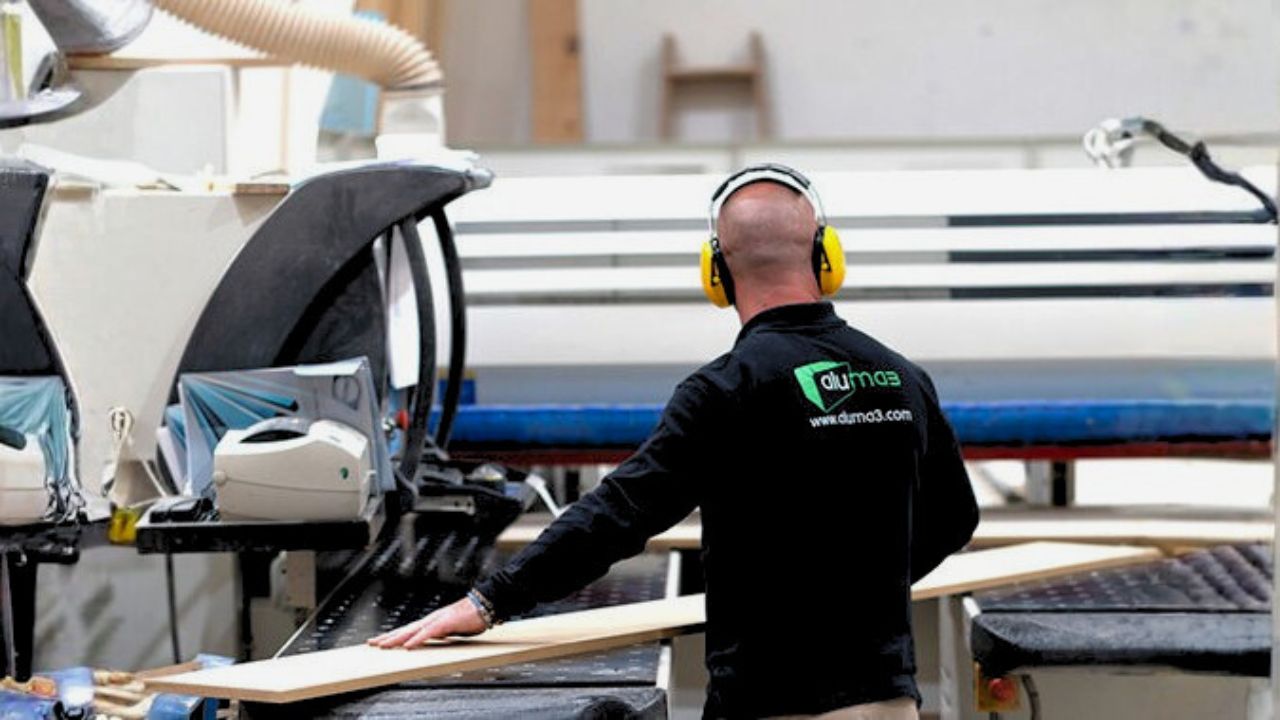
In-house manufacturing is a critical enabler of applying the EcoDesign approach in retail in a meaningful and controlled way. When design and production are integrated, more precise decisions can be made at every stage around materials, processes, and logistics, overall reducing environmental impact throughout the project.
This is precisely where in-house manufacturing becomes a key differentiating factor. Unlike outsourced models, own production makes it possible to apply sustainability criteria from the very origin, ensuring greater traceability and control across the entire furniture lifecycle. Without control over manufacturing, EcoDesign cannot be applied in any meaningful sense.
For Aluma3, in-house production allows us to:
- Full and adaptive control over materials: from selection and origin through transport, storage, and treatment.
- Process optimization. We can sustainably reduce waste and improve energy efficiency at every stage.
- Complete design freedom without external limitations in manufacturing, transport, and final setup.
- Greater traceability with end-to-end monitoring from design through installation, assembly, and disassembly.
- Maximizing our own daily reuse capacity through direct management of recovered materials.
This level of control not only improves the quality of the final result, it allows EcoDesign and circular economy principles to be applied in a genuinely practical way. The ability to recover materials from previous projects and reintegrate them into new spaces is one of the key levers for reducing environmental impact in retail.
In-house manufacturing also enables greater flexibility in environments where spaces change constantly. The ability to adjust, modify, or repurpose elements without relying on third parties improves operational efficiency and reduces the need to produce new resources.
At Aluma3, in-house production is embedded in the process from the outset, allowing us to apply EcoDesign and sustainability criteria coherently across every project from design through installation and space reuse.
One example of this approach is the Maison Francis Kurkdjian corner at El Corte Inglés Serrano (Madrid), where every element of the furniture was custom-manufactured in our workshops. The combination of materials (natural marble, brushed brass, and lacquered finishes) produced a space coherent with the brand’s identity, balancing both aesthetics and durability.

In-house manufacturing made it possible to adapt every piece to the specific needs of the project, optimizing design, production, and installation within the demanding context of luxury retail. The result is a space distinguished not only by its visual quality, but also by its technical precision and adaptability. This project demonstrates how in-house manufacturing is essential to executing EcoDesign with precision.
EcoDesign in Luxury Retail: Sustainable Design Applied to Commercial Space
The EcoDesign methodology in luxury retail is a design approach that integrates sustainability criteria across the entire lifecycle of the commercial space. It is not limited to material selection as it encompasses everything from the conceptualization of the design through manufacturing, use, and the reuse of every element. The objective of EcoDesign is clear: to reduce environmental impact without compromising the customer experience or brand identity.
In this context, EcoDesign becomes a strategic tool for brands as it enables the creation of spaces that are more efficient, adaptable, and aligned with the evolving expectations of today’s consumer.
Unlike more traditional approaches, EcoDesign in retail means making decisions from the very beginning of the project, taking into account aspects such as:
- Selection of sustainable materials
- Modular and reusable design
- Optimization of manufacturing processes
- Reduction of environmental impact in logistics and installation
- Planning for future disassembly and reuse
EcoDesign aligns brand values with a reality that consumers are demanding with increasing urgency:
- Transparency in processes and materials
- A genuine commitment to the environment
- Consistent and sustainable experiences
In luxury retail, where the space is a direct extension of the brand, EcoDesign does not constrain creativity — it redefines it. It enables the creation of environments that are not only aesthetically compelling, but also coherent with values such as sustainability, transparency, and responsibility.
Far from limiting creativity, this approach expands the possibilities of design by requiring more strategic and intentional thinking. And having a partner who has genuinely internalized this philosophy and applies it continuously, like Aluma3, is part of what makes the difference. In this sense, EcoDesign is positioned as the reference framework for the design of sustainable commercial spaces in luxury retail.
From Design to Impact: How EcoDesign Is Applied and Measured
Within EcoDesign, sustainability moves beyond materials to encompass the entire manufacturing system.
At Aluma3, this approach is also embodied through the integration of solar energy into our value chain. At our factory in Arganda del Rey, we have installed more than 200 photovoltaic modules, reinforcing a production model oriented toward efficiency and reduced environmental impact. The incorporation of renewable energy supports a more stable and predictable operation, reducing dependence on energy market volatility and optimizing long-term efficiency.

An increasing number of brands are also adopting tools that allow them to measure and compare the real impact of their projects and suppliers.
Platforms such as EcoDesign Cloud, driven by L’Oréal, generate an Eco Score that evaluates the environmental impact of a product from design through use, establishing a new data-based standard for the industry.

In this context, Aluma3 has been recognized as an EcoDesign Cloud Certified Member, becoming part of an international network of professionals who integrate eco-design into their decisions through verifiable data and metrics. We regard this recognition not as a destination, but as a commitment to continuous improvement toward a more responsible, transparent, and demanding retail industry.
Regulation and Sustainability in Luxury Retail: The New EcoDesign Framework
The advance of EcoDesign in retail is driven not only by an evolution in design thinking, but also by a new regulatory environment that is reshaping the rules of the sector.
Regulations such as the ESPR (Ecodesign for Sustainable Products Regulation, EU Regulation 2024/1781), in force since July 2024, extend the scope of sustainable design to virtually all products on the European market, including retail furniture. This framework introduces key requirements around durability, repairability, and recyclability, as well as tools such as the Digital Product Passport (DPP), which enables full product traceability across its lifecycle.
In parallel, the CSRD (Corporate Sustainability Reporting Directive) requires large companies and progressively their entire supply chains to report on their environmental impact in a verifiable manner. A requirement that directly affects luxury brands and, by extension, every agent involved in the development of their commercial spaces.
In this context, EcoDesign moves from being a strategic choice to becoming a structural necessity, aligning design, manufacturing, and measurement under increasingly rigorous criteria.
Designing with Purpose: The Value of EcoDesign in Retail
EcoDesign in retail is not a passing trend, but a necessary evolution in the way commercial spaces are designed. Applying it in a comprehensive way means integrating sustainability, material selection, and environmental impact management throughout the entire process, from design through manufacturing and reuse.
EcoDesign makes it possible to create spaces that are more efficient, responsible, and aligned with the new expectations of the market where sustainability is no longer an added value, but a baseline requirement. EcoDesign in retail is consolidating itself as the standard for sustainable commercial space design.
In this context, having a partner who understands EcoDesign in its full scope makes a genuine difference. It is not simply about designing furniture: it is about developing spaces that communicate, adapt, and evolve over time.
At Aluma3, we approach EcoDesign as a central part of every project, integrating design, materials, and manufacturing to create sustainable and durable solutions for luxury retail.
Today, design has moved beyond being purely an aesthetic matter to become a strategic tool capable of generating real value, both for the brand and for the environment. EcoDesign in retail is not just a trend; it is the new standard on which the commercial spaces of the future are being built.
Frequently Asked Questions About EcoDesign
What is EcoDesign in retail?
EcoDesign in retail is a design approach that integrates sustainability, responsible materials, and circular economy principles across the entire lifecycle of the commercial space.
What materials are used in sustainable retail?
Sustainable materials used include certified wood (FSC), recycled metals, reusable surfaces, and high-durability composites. Within the EcoDesign framework, these materials are selected to reduce environmental impact and extend their useful life.
What is eco furniture in retail?
Eco furniture in retail is furniture designed under EcoDesign criteria, taking into account its full lifecycle — including manufacturing, use, reuse, and recycling — with the goal of minimizing environmental impact.
What advantages does EcoDesign bring to brands?
EcoDesign improves project efficiency, reduces long-term costs, strengthens brand perception, and makes it possible to communicate a genuine form of sustainability grounded in tangible actions.
What is the difference between sustainable design and EcoDesign?
Sustainable design is a broad concept, while EcoDesign is an applied approach that integrates environmental criteria into every phase of design and manufacturing, with a practical and measurable focus.
How is EcoDesign applied in luxury retail?
EcoDesign in luxury retail is applied by integrating sustainable materials, modular design, controlled manufacturing, and reuse strategies from the initial project phase ensuring that the entire lifecycle of the space is efficient and responsible.
What is the ESPR regulation and how does it affect luxury retail?
The ESPR (Ecodesign for Sustainable Products Regulation) establishes new sustainability requirements applicable to products sold in the EU, including retail furniture. It introduces criteria such as durability, repairability, and recyclability, along with tools like the Digital Product Passport to ensure full traceability.
What does the CSRD mean for luxury retail brands?
The CSRD requires companies to report on their environmental impact in a verifiable manner. In luxury retail, this means that both brands and their suppliers must integrate measurable sustainability criteria into the design, manufacturing, and installation of their commercial spaces.